
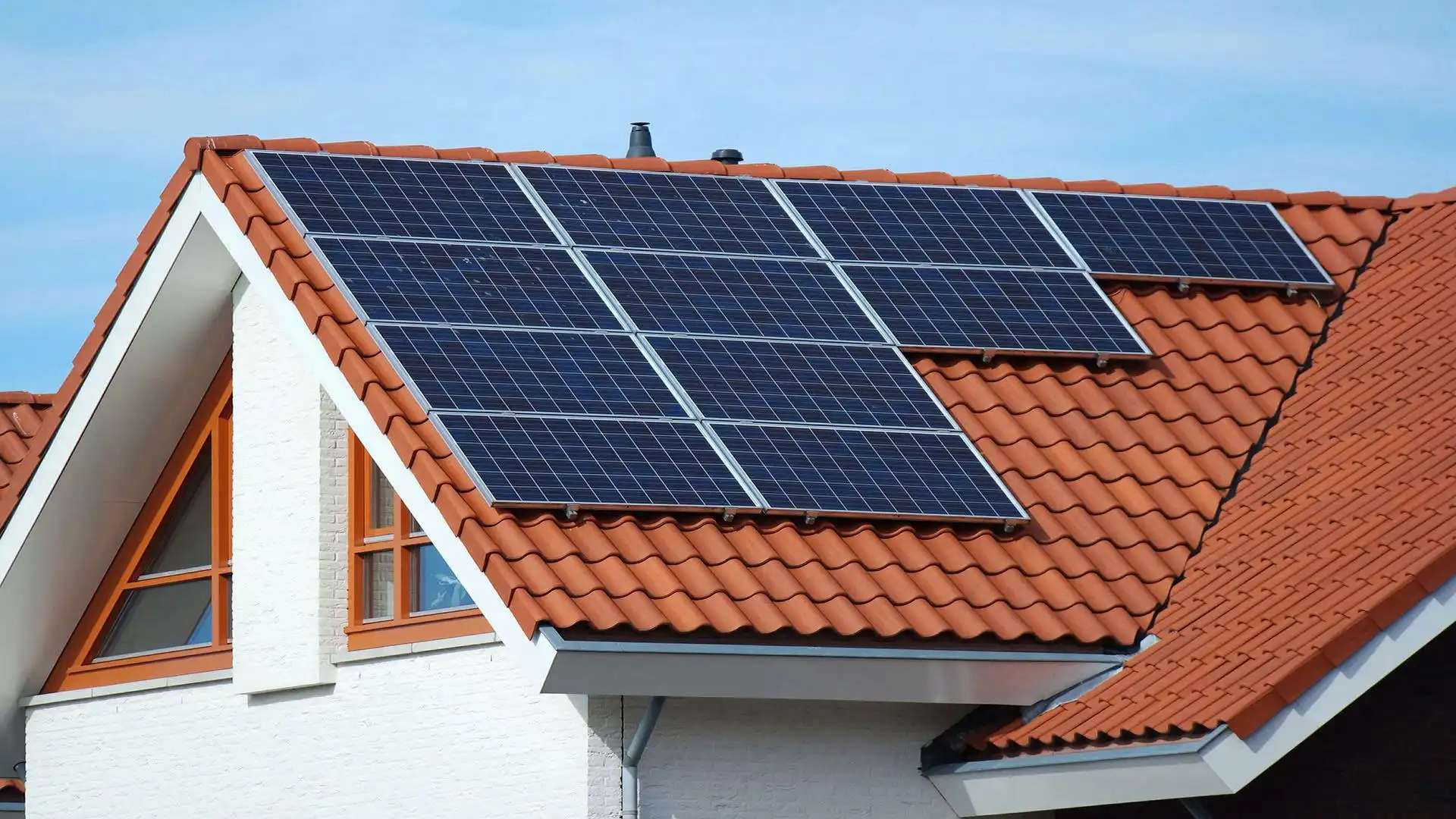
Solar panels can be costly to install, leaving some homeowners wondering, ‘do solar panels save money?’ Over the long term or maybe even short term, solar panels should pay for themself and save you money. In addition, they are environmentally friendly. When calculating the cost and savings that solar panels offer, you should consider tax rebates and other incentives. So, how much money do solar panels save? Keep reading to find out.
How much money is saved on average by using solar panels?
You may have heard about all the incredible benefits of solar panels from neighbors, friends, and/or online. Still, the essential use that people often mention is the cost savings on a monthly electric bill. So, how much money is saved by the average household that installs solar panels on their home? To quantify how much money the average homeowner saves when installing solar panels, we need to determine how much total electricity is consumed each year. The average residential utility customer in Kenya uses around 10,694 kWh per year. That is an average of 877 kWh per month. If we take the national average rate of sh16.9 per kWh and multiply it by 10,694 kWh, we can see that the average household in Kenya could save up to save up to sh180,728 per year in energy costs by installing a properly sized solar panel system. That is over sh14,950 a month in savings.
How long does it take to see savings on energy bills with solar panels?
Once a solar panel installation is fully functional, you may see savings on your next month’s energy bill. However, it can take some years to recoup your initial investment costs. Using the national average figures we used in the example above, and if a household is saving sh14,950 a year on energy costs, you can take the total cost of the initial investment and divide it by sh14,950 to see how many years it will take to make your money back. After your initial investment has been recouped, everything after that will be a profit, minus any costs associated with maintenance or repair to the solar panel system.
If you look at the national average costs associated with installing a 6-kilowatt solar panel electrical system, which is sh359 per watt as of July 2021, then the average cost for a 6-kilowatt solar installation is around sh2,164,500.By dividing the total cost of sh1,593,020 by the yearly savings of sh180,729 you can then figure that it would take just under 9-years to see a total return on your investment.
This is why you may want to make sure you will be living in your home for a long time before installing solar panels. Otherwise, you will need to pass the remaining costs off to the buyer. This could potentially increase the amount of time it takes to sell your home, depending on where you live and how popular solar is in the area.
What affects cost savings with solar panels?
The main factor that affects cost savings when it comes to solar panels is the size of the solar system. The larger the system, the larger the savings. At a certain point, an extensive enough solar system can produce enough electricity to power the entire home with energy to spare. In that case, the surplus can be sold back to the power company. Although large solar systems have more significant cost savings, you still must consider that a more extensive solar system will have a higher upfront cost.
How much does it cost to install solar panels?
In 2021, the average cost of a solar panel installation was around sh1,560,000. Smaller solar panel installations can cost as low as sh650,000 whereas larger solar installations with the most advanced solar panels can cost upwards of sh5,200,000or more.
What are the advantages of solar panels?
There are many advantages that solar panels offer. Advantages include reducing a monthly electricity bill, low maintenance costs, and the benefits to the environment that solar can provide as a renewable energy source. These are all reasons that can persuade someone to install solar panels on their home. Here is a closer look at these advantages in more detail:
- Reduction and/or elimination of electricity bill: Depending on how much of your energy needs can be met by the newly installed solar system, you could dramatically reduce or eliminate your monthly electricity bill. If you happen to generate more electricity than you use, you may be able to sell the surplus energy back to the power company in some regions.
- Low maintenance costs: Maintenance on solar panels is highly minimal. Cleaning the solar panels a few times a year and replacing the inverter every 5 to 10 years are the only maintenance requirements. Additionally, many solar panel manufacturers offer 20 to 25-year warranties.
- Environmental benefits: Solar panels can provide all the energy you need for your home without using power generated from burning fossil fuels like coal, oil, and natural gas. Utilizing solar energy can reduce your carbon footprint and help slow the harmful effects of climate change and global warming.
What are the disadvantages of solar panels?
Since we discuss the advantages of solar panels, it is only fair we also include the disadvantages. The main disadvantages of solar panels are the upfront costs, the weather dependency, and the fact that they take up a lot of space. Let us take a deeper dive into these three main disadvantages:
- Upfront costs: Covering the solar panels, inverter, batteries, wiring, and a professional installation is not cheap. Many people take on a personal loan or a home equity line of credit to pay for these costs. However, it is essential to note that you will recoup 100 percent of your investment and eventually turn a profit by reducing and/or eliminating your monthly electric bill.
- Weather dependency: The time your solar panels are the most productive is limited. Most places only have a few hours of peak sunlight hours, and if it is raining, cloudy you may notice a sizable difference in solar energy capacity.
- Takes up a lot of space: Solar panels take up a considerable amount of space, and if you want to install an extensive solar system, your roof may not be large enough to accommodate all the solar panels.
From these three main disadvantages, the one that seems to get most people’s attention is the upfront costs. As solar energy and solar installations become less expensive, this will help persuade more people to become energy independent through solar technology
What are alternatives to solar panels?
There are several solar alternatives out there on the market. Solar lights, sun tunnels, solar shingles, solar ovens, solar AC, and solar water heaters are just a few examples of how solar can be utilized in a home without installing a complete set of solar panels on your home.